
2025-10-31 06:20:00


GLOBAL FUSION TRENDS 2025

IAEA - 28 October 2025 - Fusion Energy in 2025: Six Global Trends to Watch
The fusion energy landscape is evolving rapidly. Once confined to experimental research, fusion is now emerging as a strategic national priority for research and development. The IAEA World Fusion Outlook 2025 publication highlights key developments in fusion energy around the world.
1. Fusion Energy Progress is Accelerating
Fusion has entered a decisive new phase. ITER , the world’s largest fusion experiment, remains the central international endeavour driving scientific and technical progress. A total of 33 nations and thousands of engineers and scientists are collaborating to build and operate a magnetic fusion device called a tokamak, designed to prove the feasibility of fusion as a large scale- carbon free source of energy.
At the same time, governments, private industry, and utilities are rolling out complementary initiatives that expand the global fusion landscape. New facilities are breaking ground, private-public initiatives are gaining momentum, and regulators are developing bespoke frameworks to keep pace. And end users are signalling growing confidence in the technology through early power purchase agreements.
2. Private Investment Surpasses US $10 Billion
Global private investment in fusion has exceeded US $10 billion, reflecting growing confidence in the sector. Funding is flowing from sovereign wealth funds, major corporations and energy users, supporting a new generation of fusion developers and technologies.
3. Fusion Set to Play Big Role in Future Electricity Mix
Fusion energy is projected to play a significant role in meeting the world’s growing demand for clean, baseload power. For the first time, the IAEA World Fusion Outlook includes global modelling of fusion energy deployment, conducted by the Massachusetts Institute of Technology (MIT). The study explores how fusion could contribute to the future electricity mix under diverse policy, cost and technological assumptions.
In the lowest capital cost scenario of US $2.8K/kW in 2050, fusion’s share of electricity generation could reach up to 50% by 2100. Even in the highest cost scenario of US $11.3K/kW, fusion energy is projected to reach 10% of global electricity generation by 2100.
The modelling also highlights fusion’s economic value: with a rise in demand for clean electricity generation, fusion could add trillions of dollars to global GDP.
4. International Collaboration is Powering Ahead
The IAEA’s World Fusion Energy Group, established in 2024, is fostering global dialogue and alignment. More than 160 fusion facilities are now operational, under construction or planned, and international cooperation is expanding through multilateral platforms. Although there is currently no globally harmonized definition of a fusion power plant, many jurisdictions recognize the need to establish clear frameworks for fusion machines intended to produce electricity or heat for commercial use.
5. Fusion Technology is Diversifying
Fusion is advancing through multiple parallel efforts. Building on the foundation established by large scale international collaborations such as ITER, a range of approaches such as tokamaks, stellarators, laser and inertial confinement concepts, magneto-inertial concepts, mirror machines, field reversed configurations, pinches and more, are being developed across public and private sectors. This diversity is driving innovation and strengthening the sector as it searches for pathways toward realizing fusion energy.
6. High-Temperature Superconducting Magnets Enable Smaller Fusion Devices
The 2025 edition of the IAEA World Fusion Outlook includes a special focus on high-temperature superconducting (HTS) magnets, which could revolutionize the design of next generation fusion facilities. HTS materials could be used to design more compact and efficient fusion machines, but important design compromises and engineering trade-offs are still needed.
HTS magnets are increasingly being applied across diverse fusion concepts, including tokamaks, stellarators, and mirror machines. Projects such as SPARC and WHAM are integrating HTS coils to enhance performance and reduce size, cost, and development time. Several forthcoming designs are also evaluating HTS technologies as a core component of their systems.
-----
Earlier:

2025, October, 17, 06:30:00
GLOBAL ELECTRICITY SYSTEM TRANSFORMATION
The global electricity system is undergoing a major transformation, shifting from a traditional, centralized model to a more digital, decentralized one.

2025, September, 24, 06:50:00
GLOBAL ENERGY TRANSITION FINANCING STOP
The world’s leading banks spent just 89 cents on low-carbon energy companies and projects such as wind, solar and grids for every dollar they allocated to fossil fuels.

2025, July, 30, 06:45:00
GLOBAL ENERGY DEMAND: +23%
Global primary energy demand is set to rise from 308 million barrels of oil equivalent (mboe/d) in 2024 to 378 mboe/d in 2050.

2025, May, 14, 06:50:00
GLOBAL ENERGY TRANSITION
Governments worldwide are recognising the economic and strategic benefits of controlling supply chains for low-carbon technologies. Specifically, China’s dominance in solar PV module production (almost 85% of global production as of 2023) (Statista, 2024a) and battery manufacturing (79% of global EV Li-ion batteries as of 2021) (Statista, 2024b) has spurred rival policies.

2025, February, 20, 06:20:00
GLOBAL ENERGY TRANSFORMATION
The energy and utilities sector is undergoing a profound transformation driven by the need for greater efficiency, sustainability, and resilience in response to evolving consumer demands and global climate objectives.

2024, December, 6, 06:30:00
GLOBAL ELECTRICITY DEMAND UP
The demand for electricity is rising rapidly. Onshoring of manufacturing, EVs (both private and commercial) and, most importantly, data centers, serving the demand for AI, are all staking their claim to more electricity.
2024, October, 18, 06:35:00
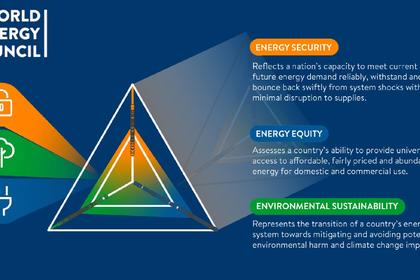
GLOBAL ENERGY SYSTEM SUSTAINABILITY
Furthermore, the vulnerabilities of the power sector have cascading effects on critical infrastructure such as communication, health and other emergency services. On a power system level, a lack of situational awareness, inadequate system visibility and ageing infrastructure further contribute to a wider disturbance propagation and slowing down of restoration services.