
2025-02-07 06:35:00


INDIA NEED NUCLEAR

N- February 4, 2025 - India’s Finance Minister Nirmala Sitharaman, introducing the Union Budget for 2025, announced the creation of a new “Nuclear Energy Mission for Viksit Bharat [Developed India] and pushed for amending laws that are limiting nuclear industry growth. Viksit Bharat 2047 represents the government’s vision to transform India into a developed entity by its 100th independence in 2047.
Sitharaman said that the development of at least 100 GWe of nuclear energy by 2047 is “essential for our energy transition efforts”. She added: “For an active partnership with the private sector towards this goal, amendments to the Atomic Energy Act and the Civil Liability for Nuclear Damage Act will be made.” She also said that a Nuclear Energy Mission for research & development into small modular reactors (SMRs) will be set up with an investment of INR2bn ($23m). At least five indigenously developed SMRs will be operational by 2033, she noted.
Speaking to NDTV, Dr AK Mohanty, Chairman of the Atomic Energy Commission (AEC), said that 100 GW by 2047 is “very achievable” as India now has the technical capability. “But getting land and appropriate nuclear fuel could be a limiting factor,” he said. “The private sector can help augment capacity by building nuclear plants especially small modular reactors,” he added.
India currently has an installed nuclear capacity of 8,180 MWe, according to the Atomic Energy Regulatory Board. This includes 24 operating reactors, 20 of which are indigenous pressurised heavy water reactors (PHWRs) and four of which are light water reactors (LWRs) built with Russian assistance.
Dr Anil Kakodkar, former AEC Chairman, said that “for the first time, there is a clear realisation that to achieve the target of Net Zero, nuclear energy is an inevitable requirement”. He added, however, that “amending the Atomic Energy Act has to be done keeping in mind a long-term horizon and knee-jerk changes should be avoided s because nuclear security is involved.”
Dr Kakodkar said for the target of 100 GWe by 2047 to be met, this would require at least 4,000-5,000 MWe of installed nuclear capacity every year for the next 22 years. He asked: “Realistically do we have the capacity to implement this massive augmentation?”
As to constructing five SMRs by 2033, Dr Kakodkar noted that, ideally, power company NTPC (formerly the National Thermal Power Corporation) “should take the lead in setting up SMRs at locations where coal plants are being retired”.
In 2024, Union Minister Dr Jitendra Singh projected that India’s installed nuclear power capacity will triple by 2031-32. “The present installed nuclear power capacity is set to increase from 8,180 MWe to 22,480 MWe by 2031-32,” he told the Parliament in December. HE emphasised that there has been more than a 70% increase in India’s nuclear power capacity in the last 10 years, from 4,780 MWe in 2013-14 to 8,180 MWe at present.
At present, 21 reactors with a total capacity of 15,300 MWe are at various stages of implementation by Nuclear Power Corporation India Limited (NPCIL). These include nine reactors with a total capacity of 7,300 MWe under construction (including the Prototype Fast Breeder Reactor (PFBR) by Bharatiya Nabhikiya Vidhyut Nigam Limited – BHAVINI) and 12 reactors with a capacity of 8,000 MWe (including two 500 MWe twin unit of Fast Breeder Reactors (by BHAVINI) at the pre-project stage.
PTI, commenting on the budget speech and the five planned SMRs, noted that in her budget speech last year, Sitharaman had mentioned Bharat Small Reactors (BSRs), meaning India’s indigenous SMRs. “The semantic shift from BSR to SMR might mean that all the five reactors may not be indigenous.”
BSRs are likely to be India’s PHWRs, modified with features (such as passive safety). Of the 20 in operation, 15 are ‘small’ (220 MWe). “This gives an opportunity to assume leadership in SMRs, with rich export possibilities,” PTI commented. In addition, the SMRs (or BSRs) could be built to handle newer fuels that may include thorium, of which India has the world’s largest reserves.
In October 2024, Indian technology company Larsen & Toubro (L&T) signed a memorandum of understanding (MOU) with US-based Clean Core Thorium Energy (CCTE) to collaborate on CCTE’s ANEEL (Advanced Nuclear Energy for Enriched Life) fuel. The fuel is made of thorium and high-assay low-enriched uranium (HALEU), developed for use in PHWRs and Canada deuterium uranium (Candu) reactors. “One has to wait for the details of the Nuclear Energy Mission to see how it takes the SMR movement forward,” PTI said.
There are currently four SMRs operating or in advanced stages of construction in Argentina, China and Russia, and several existing and newcomer nuclear energy countries are conducting SMR research and development.
On changes to nuclear law, PTI noted: “The Atomic Energy Act needs to be amended to allow private sector participation in nuclear energy. By all accounts, this will be done.” The amendment is expected to open doors for private companies to play a more active role in the nuclear energy landscape. This shift aligns with the government’s broader push to promote privatization and enhance public-private partnerships in critical sectors.
However, amending the Civil Liability for Nuclear Damage (CLND) Act “is contentious and calls for tip-toeing through a legal minefield”, PTI said. It added: “The very mention of the amendment has got the Opposition up in arms – Congress leader Jairam Ramesh, has already posted on X saying, ‘To appease Mr Trump, the FM announces that the Act will be amended’.” Prime Minister Narendra Modi is expected to visit Washington shortly to hold wide-ranging talks with US President Donald Trump with a focus on further shoring up bilateral cooperation in a range of areas including trade, energy and defence.
The CLND Act regulates who will pay in the case of a nuclear mishap – the government, the plant operator or the equipment supplier. Currently the operator’s liability is capped at INR 5bn, beyond which the government will pay. However, this cap could be raised or removed by the government. The international Convention on Supplementary Compensation (CSC) for Nuclear Damage, which India ratified in 2014, says that the operator’s liability is “absolute” irrespective of who is at fault.
However, India’s nuclear liability regime has remained a stumbling block for France and the USA. Following the 1984 Bhopal gas tragedy which killed at least 4,000 and left another 4,000 severely disabled, and for which no adequate compensation has ever been paid by the US companies involved, India’s parliament passed a law, making equipment suppliers responsible for any accident. India adopted the CLND in 2010 making Indian operators primarily liable for any nuclear accident but leaving open the possibility of recourse to suppliers. A compromise on liability was reached with Russia, which proceeded with construction at the Kudankulam NPP. An insurance scheme was then put in place offering suppliers some further protection, but the USA remained hesitant.
By amending the Act, the government aims to create a more balanced and transparent liability framework that encourages both domestic and international private investments. However, India still has bitter memories of Bhopal, hence the opposition to any changes.
-----
Earlier:

2025, January, 29, 06:40:00
INDIA RENEWABLES 217 GW
India aims to achieve 500 GW of non-fossil fuel-based energy capacity by 2030, with an intermediate target of 358 GW at the end of 2026.

2024, December, 13, 06:45:00
INDIA NEED RUSSIAN OIL
India's rising Russian imports have come at the expense of rival Middle Eastern producers. The Reliance-Rosneft deal would represent another challenge for competitors, including Saudi Arabia.
2024, November, 14, 06:50:00
INDIA, RUSSIA TRADE: UP 5 TIMES
Trade between the traditional allies have shot up five times in the past three years, according to trade ministry data, as India lapped up Russian crude oil while most others shunned its barrels following the invasion of Ukraine.
2024, November, 14, 06:45:00
INDIA ENERGY TRANSFORMATION
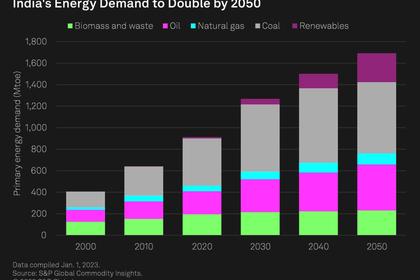
Since gaining independence in 1947, India's power sector has achieved remarkable growth, with the installed capacity soaring from a mere 1,300 MW to an impressive 400 GW by 2023. This growth trajectory has been propelled by strategic investments in thermal, hydro, and renewable energy, underlining the sector's resilience, adaptability, and alignment with global sustainability goals.
2024, October, 23, 06:55:00
INDIA, RUSSIA TIES
“In the past three months, my visiting Russia twice demonstrates our close relationship and deepening friendship,” Modi said Tuesday in televised remarks. Putin also praised the “strategic partnership” between the two countries.
2024, October, 8, 06:35:00
INDIA'S ENERGY TRANSITION
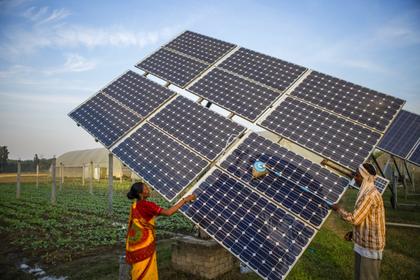
Electricity being the key driver for rapid economic growth and poverty alleviation sets the target of providing access to all households.
2024, September, 3, 06:50:00
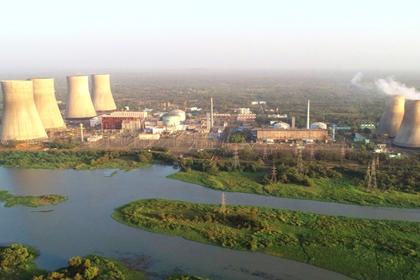
INDIA NUCLEAR POWER: +40
Finance Minister Nirmala Sitharaman, in her July Union budget announced that the Centre would partner with the private sector to establish Bharat Small Reactors and for research and development of SMRs.
2024, August, 22, 06:50:00
INDIA, RUSSIA NUCLEAR DEAL $1.2 BLN
Kudankulam NPP will comprise six units with VVER-1000 reactors. Work began following an intergovernmental agreement between India and Russia signed in 1988.