
2025-05-22 06:35:00


CHINA'S ENERGY SYSTEM WILL UP
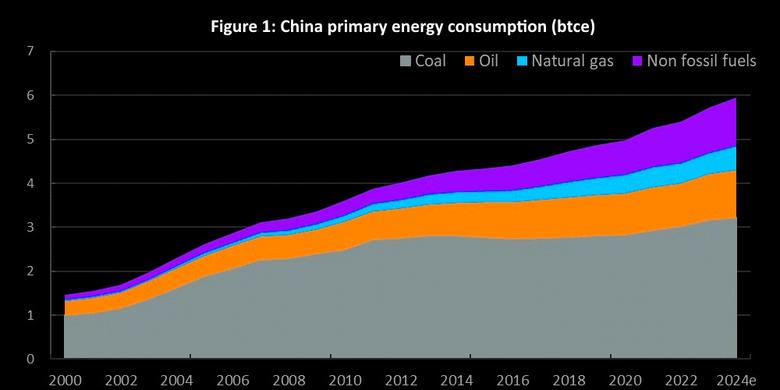
The Oxford Institute for Energy Studies - 13.05.25 - Testimony before the U.S.-China Economic and Security Review Commission
China’s Groundwork for the New Energy Economy
China’s Energy Ecosystem and Growing Needs
China’s energy demand increased four-fold between 2000 and 2024. Demand was met primarily by fossil fuels and most notably coal. Throughout the period, China’s energy demand grew more rapidly than global averages, reflecting the country’s industrialisation and economic development, with CO2 emissions rising strongly. Between 2000 and 2015, a combination of policy interventions and structural economic changes led to reductions in energy intensity (the amount of energy consumed per unit of GDP) but efficiency gains slowed after 2015, decelerating further in recent years.
Since 2019, however, China’s energy system seems to be undergoing significant shifts. To be sure, energy consumption trends in China during and following the COVID-19 lockdowns, as in many other parts of the world, have been volatile. The initial lockdowns in 2020 were followed by a spike in economic activity and energy demand, which outpaced supplies and contributed to the power outages of 2021. Another bout of stringent lockdowns in 2022 depressed economic growth and energy use, followed by a boost in activity when they restrictions were eased. Travel resumption boosted gasoline and jet fuel demand while renewed industrial activity bolstered diesel use. At the same time, rapid electrification in the transport sector and a surge in new energy vehicle (NEV) sales has slowed gasoline demand growth, to the extent that gasoline consumption in China may have now peaked.
Meanwhile, electricity demand growth also outpaced GDP growth for five consecutive years between 2019 and 2024 due to a combination of strong industrial activity, electrification and bouts of extreme weather events. At the same time, China’s renewable energy expansion accounts for almost half of global wind and solar capacity additions. Installed wind and solar capacity in early 2025 reached 1,456 GW, exceeding thermal coal and gas capacity.
These green-shoots are worth noting because they point to a number of potential structural changes: First, China’s economy is electrifying rapidly. As a result, energy, and mainly electricity demand, is likely to continue growing. Second, in the transport sector, accelerated electrification and fuel switching could lead to steeper than expected declines in gasoline use. Diesel consumption could also plateau soon if it hasn’t already. While China’s oil demand may not fall until the early 2030s due to growing chemicals consumption, the rapid electrification is changing dynamics, impacting the country’s appetite for oil imports and its relations with its suppliers.
Third, rapid renewable deployment is set to continue even as connections to the grid face technical and institutional constraints. Renewable additions have already moderated China’s CO2 emissions, and could lead to their stabilisation even though they have not yet led to a decline. Curtailment is an ongoing policy challenge and coal remains a pillar of China’s energy system. This is complicating China’s ability to meet its “dual carbon” goals, namely to peak emissions by 2030 and achieve carbon neutrality. But Beijing’s support for renewables will continue even as climate policies take a back seat because the “new three industries” (solar photovoltaic, batteries and electric vehicles) are now significant drivers of China’s economic growth, a key pillar of the country’s industrial strategy and a source of exports and geo-economic leverage. Excess capacity in this industries is leading to lower prices which, in turn, could support accelerated deployment. In the context of a fraught trade and geopolitical environment, Beijing is prioritising resilience and flexibility in its energy system over economic efficiency and emission reductions. But the rapid build out of clean technologies could still lead to faster emissions reductions over time.
Going forward then, even as China’s fossil fuel demand growth slows, it will remain a large importer of oil and gas, and will still be a critical market for producers. At the same time, its importance as a supplier of new energy supplies will also grow. This position will come with new strengths, but also new vulnerabilities.
-----
Earlier:

2025, April, 17, 06:50:00
CHINA BUYING IRANIAN OIL
On April 10, the US Department of the Treasury sanctioned nearly 30 oil tankers involved in shipping Iranian crudes, as well as a Chinese storage terminal.

2025, April, 17, 06:40:00
CHINA COAL ENERGY UP
As of end- 2024, coal-fired power represented 37% of China’s installed capacity but 60% of its power generation.

2025, April, 17, 06:25:00
CHINA'S NUCLEAR FOR PEACE
China operates 58 civil nuclear reactors and has almost 30 new builds in progress. This represents nearly half of all power reactors currently under construction worldwide.

2025, April, 14, 06:25:00
CHINA WIND +3 GW
China has announced the start of construction on three offshore wind projects totalling 3 GW off the coast of the Guangdong Province, southern China, namely the Fanshi-1, Qingzhou-5 and Qingzhou-7 projects.

2025, March, 19, 06:40:00
CHINA WITHOUT U.S. LNG
China is also boosting its energy security by focusing on producing more gas at home, which will help to curb import growth.

2025, January, 16, 06:40:00
CHINA NUCLEAR POWER GROWTH
China's total fleet of 58 operable reactors supply about 5% of the country's electricity.
2024, October, 4, 06:35:00
CHINA RENEWABLES UP
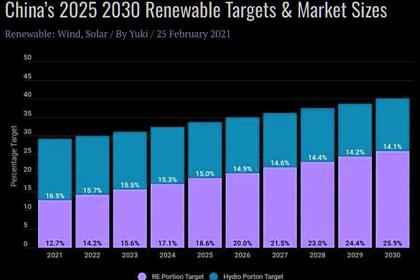
The world’s biggest polluter can cut its carbon dioxide emissions by at least 30% by 2035 by continuing trends in the power sector and extending efforts in other industries
2024, October, 2, 06:40:00
CHINA CLEAN ENERGY TRANSITION
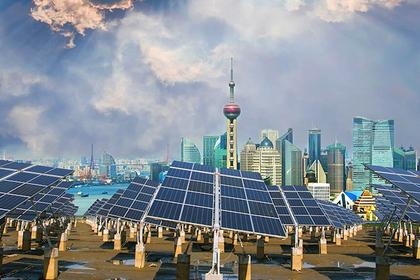
Inner Mongolia, which leads China in coal production this year, already has 88 gigawatts of wind and solar capacity, with another 170 gigawatts in the pipeline. That’s a combined total that would dwarf the power fleet of Germany.