
2025-05-22 06:50:00


NO RUSSIAN GAS FOR EUROPE
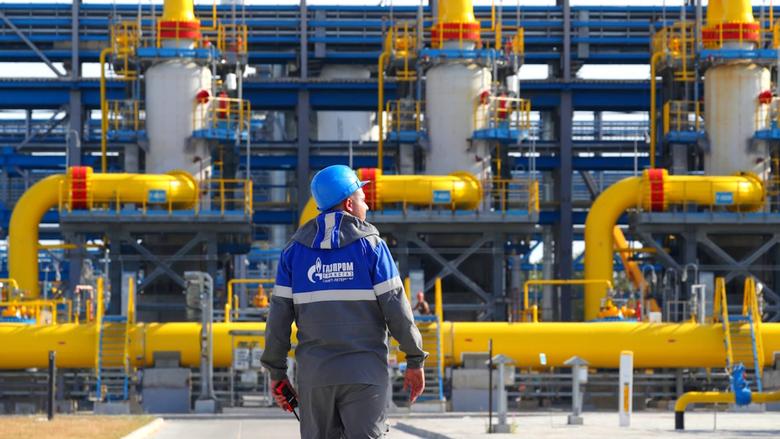
BLOOMBERG - May 20, 2025 - The European Union is likely to propose a quota as the mechanism to enforce a bloc-wide import ban on Russian gas by the end of 2027, which officials say should provide companies with a legal basis to terminate long-term purchase contracts.
The European Commission is discussing the introduction of an import quota of zero for Russian gas, according to people with knowledge of the matter. That will allow European buyers to invoke force majeure to terminate agreements with Russian suppliers, said the people, who asked not to be identified commenting on internal talks.
The plan provides the clearest signal yet as to how enforceable and effective the ban will be after the EU earlier this month unveiled a broad road map to gradually phase out Russian fossil fuels. The quota would be directly applicable in all member states, and officials expect that its effectiveness would be comparable to that of a sanctions regime, the people said.
While no longer the bloc’s biggest supplier, Russia still accounts for almost a fifth of European demand and the Kremlin uses those revenues to fund its war in Ukraine.
The quota — to be proposed in mid-June — would need qualified majority support from national governments and a majority backing from the European Parliament to take effect across the bloc, the people said.
The plan may still change as talks in the commission continue. The EU’s regulatory arm has a policy of not commenting on ongoing work.
Under its two-step roadmap announced earlier this month, the commission wants to initially ban all new contracts and halt existing deals on the spot market — a third of Russian gas flows to the bloc — by the end of 2025. Long-term contracts will be phased out by the end of 2027.
The cut in reliance on Moscow will open the way for US suppliers to send more LNG to Europe, something that President Donald Trump has repeatedly called for.
For now, the bloc remains an attractive destination for cargoes from Russia’s Yamal LNG plant in the Arctic, with long-term contracts signed by companies such as TotalEnergies SE, Naturgy Energy Group SA and Germany’s Securing Energy for Europe GmbH.
One of the key questions for the industry has been what measures the commission would propose to enable companies to walk away from purchasing obligations under existing contracts.
The EU has avoided proposing sanctions in relation to gas imports because opposition from Hungary and Slovakia — which continue to import by pipelines — would deny it the necessary unanimous support. Instead, the commission plans to rely on various provisions in the EU laws that enable the use of tools requiring qualified-majority backing.
Such instruments are commonly used in trade policy and can be used in energy policy to ensure the security of supply. The EU also relied on qualified-majority-support measures to contain a crisis that three years ago pushed energy prices to records following a cut in Russian gas supplies.
Once adopted, a zero-quota on Russian gas imports would be enforced by national authorities. A strong majority of countries support the phaseout plan, Polish deputy environment minister Krzysztof Bolesta told Bloomberg News in an interview last week. His country chairs member states’ meetings on the roadmap as the holder of the rotating EU presidency.
Still, some member states have been calling on the commission to ensure that the legal basis for the phaseout is as strong as possible in order to avoid fines for companies that terminate contracts with Russian suppliers.
During talks earlier this month among national energy officials in Brussels, Spain voiced concerns over possible penalties and countries including France and Greece said it was of key importance that the ban is legally sound.
-----
Earlier:

2025, May, 13, 06:40:00
EUROPE WITHOUT RUSSIAN ENERGY
"Despite the significant progress achieved under the REPowerEU Plan and via sanctions since Russia's invasion of Ukraine, in 2024 the EU saw a rebound in Russian gas imports," the EC said. "More coordinated actions are therefore needed, as the EU's overdependency on Russian energy imports is a security threat."

2025, April, 16, 06:35:00
RUSSIAN GAS FOR EUROPE ANEW
The French state partly owns Engie, which used to be among the biggest buyers of Gazprom's gas. Holleaux said Russia could supply around 20-25% of EU needs, down from 40% before the war.

2025, April, 14, 06:40:00
EUROPEAN RENEWABLES WILL UP
EU countries are expected to add 89 gigawatts of new renewable energy capacity in 2025, including 70GW of solar and 19GW of wind, according to Commission projections shared with Reuters. The projections are based on industry data.

2025, April, 8, 06:25:00
RUSSIAN GAS FOR SLOVAKIA
Gazprom began supplying gas to Slovakia again at the beginning of February, using volumes given up by Hungary on the TurkStream pipeline, SPP said last month. Volumes were due to double from April, but no amounts were given.

2025, March, 27, 06:55:00
RUSSIAN ENERGY FOR HUNGARY
Hungary has gone the other way, leveraging its ties to Moscow for economic gain. It carved out exemptions from under EU sanctions on Russian oil and doubled down on natural gas purchases from Russia. Hungary is also pressing on with the Russia-led expansion of its sole nuclear power plant.

2025, March, 27, 06:50:00
EUROPEAN GAS PRICES DOWN
Lower LNG demand from China is also providing near-term relief for European buyers competing for shipments. The Asian country’s purchases are forecast to fall this year for the first time since 2022,

2025, January, 24, 06:50:00
EUROPEAN GAS PRICES RISE
While Europe has managed to diversify its supplies since the energy crisis three years ago, this heating season has served as a reminder of the region’s vulnerability, especially given its growing reliance on volatile LNG flows.

2024, December, 13, 06:50:00
EUROPEAN ENERGY CRISIS
Europe was not yet out of an energy crisis that began with Russia's invasion of Ukraine in 2022.