
2025-07-30 06:45:00
GLOBAL ENERGY DEMAND: +23%

OPEC- 10 July 2025 - World Oil Outlook 2050
Current uncertainties surrounding the global economy and energy landscape are quite significant
The World Oil Outlook (WOO) 2025 again sets out OPEC’s long-term views and projections on the evolving global energy future. However, the current uncertainties surrounding the global economy and energy landscape make this task challenging. Despite this, and bearing in mind the high degree of uncertainty, this Outlook looks to thoroughly review the key assumptions and outline a plausible and viable energy future for all. As such, it intends to provide an impartial, consistent and realistic understanding to all stakeholders.
Energy policies in a state of re-evaluation
Energy policies across major economies are undergoing a significant recalibration as nations navigate an array of complex challenges. While energy policy ambitions appear robust, a noticeable trend of policy pushback and intensified scrutiny is evident, primarily in the US and in a number of other developed countries. Decision-makers are increasingly challenged to address a variety of priorities, including energy security, energy affordability, reducing emissions, sustainability and industrial competitiveness. Furthermore, while many national changes can be relatively small, the cumulative effects on regional and global energy demand can be much more significant.
Demographic trends and economic growth drive long-term energy demand
The global population is expected to rise by 1.5 billion from its current level of 8.2 billion in 2024 to almost 9.7 billion by 2050, with the working age population set to increase by 800 million over the same time period to reach around 6.1 billion. The global urbanization rate is expected to increase from 58% to 68%, resulting in about 1.9 billion people moving to cities by 2050. Concurrently, the global economy is set to more than double in size, increasing from $171 trillion in 2024 to $358 trillion in 2050, while global average income is expected to rise from approximately $21,000 in 2024 to $37,100 (all 2021 PPP) by 2050. Non-OECD countries are set to play the key role, driving population expansion and seeing economic growth rates well above the global average.
Global primary energy demand to increase by 23% to 2050
Global primary energy demand is set to rise from 308 million barrels of oil equivalent (mboe/d) in 2024 to 378 mboe/d in 2050. This is an increase of 23% over the outlook period, or 0.8% per annum (p.a.) on average. The growth will come almost entirely from developing regions, led by India, Other Asia, Africa and the Middle East. At the same time, energy demand in developed countries is expected to generally stay flat and/or decline.
Demand for all fuels increases, with the exception of coal
Demand for all primary fuels is set to increase to 2050, with the exception of coal. Driven by supportive polices and declining electricity generation costs, demand for other renewables (mostly wind and solar) is set to increase by 40.5 mboe/d over the outlook period. Demand for oil and gas is also expected to increase strongly, in line with the need for reliable and affordable energy. Oil demand is expected to rise by 18.2 mboe/d, while natural gas rises by almost 20 mboe/d to 2050. After a long period of stagnation, nuclear energy is likely to see significant growth, rising by 10 mboe/d in the outlook period. Demand for coal is expected to drop by 30.4 mboe/d, due to unfavourable energy and climate policies and the penetration of other fuels.
Oil retains the largest share in the energy mix; oil and gas combined remain above 50%, with other renewables at 13.5% in 2050
Despite a marginal decline in its share, oil is set to maintain the largest share in the energy mix in 2050, at just below 30%. The combined share of oil and gas is expected to stay above 50% between 2024 and 2050. At the same time, the share of other renewables in the energy mix increases to 13.5% in 2050, up by 10 percentage points (pp) from 2024.
Electricity demand set to rise by over 80%, supported by growth in developing countries
Total electricity generation is expected to increase from around 31,500 terawatt hours (TWh) in 2024 to roughly 57,500 TWh in 2050, supported by demand growth in the residential/ commercial sector, industry and data centres. Around 75% of this growth is anticipated to come from developing countries, with almost 60% alone from developing countries in Asia.
By far the largest increase in the generation mix is projected for other renewables (mostly wind and solar), which are expected to expand from around 4,900 TWh in 2024 to 26,000 TWh in 2050.
Global oil demand set for continued robust growth, reaching almost 123 mb/d by 2050
Supported by recent policy shifts and an improved economic outlook, global oil demand is set for continued robust growth of 9.6 millon barrel per day (mb/d) over the medium-term period, rising from 103.7 mb/d in 2024 to 113.3 mb/d by 2030. The primary reason for this is strong oil demand growth in non-OECD countries, which is projected to increase by 8.6 mb/d to 2030 and reach 66.7 mb/d. Moreover, OECD oil demand is also set to increase over the same period, albeit by a much smaller 1 mb/d to reach 46.6 mb/d.
In the long term, global oil demand is projected to rise by more than 19 mb/d between 2024 and 2050, reaching almost 123 mb/d. While non-OECD oil demand is projected to increase by almost 28 mb/d over the period, OECD oil demand is set to witness a decline of 8.5 mb/d.
India leads incremental long-term demand growth
India, Other Asia, the Middle East and Africa are set to be the primary sources of long-term oil demand growth. Combined demand in these four regions is set to increase by 22.4 mb/d between 2024 and 2050, with India alone adding 8.2 mb/d. China’s oil demand is projected to increase by less than 2 mb/d over the same time horizon. Moreover, a large part of China’s increase is expected to occur over the medium term, with fewer demand changes expected for the rest of the forecast period.
Road transport, petrochemicals and aviation are key for future oil demand growth
Oil consumption in various transportation modes constitutes the backbone of global oil demand throughout the forecast period. Indeed, the transportation sector accounted for more than 57% of global oil demand in 2024 and, with minor variations, is projected to retain this share over the entire forecast period. Within this sector, the largest incremental oil demand is expected in road transportation and aviation, adding 5.3 mb/d and 4.2 mb/d, respectively.
A significant demand increase of 4.7 mb/d is also projected in the petrochemical sector.
Oil demand growth in road transportation is expected to come on the back of a large expansion in the global vehicle fleet, particularly in developing countries. The global vehicle fleet is expected to increase from 1.7 billion in 2024 to 2.9 billion in 2050, with the fastest growth expected in the segment of electric vehicles (EVs). Nevertheless, internal combustion engine (ICE) vehicles are set to continue dominating the global fleet and still account for around 72% in 2050.
Bulk of future oil demand growth is for light products and middle distillates
Largely reflecting sectoral oil demand trends, light refined products and middle distillates are expected to drive most of the future increase, while heavy products are set to witness only modest changes due to regulatory constraints and ongoing oil substitution by alternative energy sources. As a result, major long-term demand growth is expected for gasoil/diesel (4.4 mb/d), jet/kerosene (4.1 mb/d), liquefied petroleum gas (LPG)/ethane (3.6 mb/d), gasoline (3.1 mb/d) and naphtha (2.7 mb/d).
US liquids production drives medium-term supply growth, but peaks in 2030
Non-Declaration of Cooperation (non-DoC) liquids production is set to increase from 53.3 mb/d in 2024 to 59 mb/d in 2030, or by 5.7 mb/d. The US is expected to drive this growth, contributing 1.4 mb/d, or just over 25%, followed by Brazil, Qatar, Canada, Argentina and others. Tight oil remains the key element supporting rising US liquids production, with volumes increasing from 14.7 mb/d in 2024 to 16.5 mb/d in 2030. Thereafter, however, due to gradual resource depletion, output is projected to plateau around those levels for most of the 2030s, and subsequently decline to 14.8 mb/d by 2050.
Beyond 2030, non-DoC liquids supply plateaus around 60 mb/d
US liquids supply is set to peak at just over 23 mb/d in 2030, while total non-DoC liquids are now expected to hit a peak of around 60 mb/d in the mid-2030s, and then remain at a plateau just below that level until 2050. Beyond 2030, long-term non-DoC liquids supply growth only takes place in Canada, Brazil and Argentina, as well as a handful of other smaller increases, and this is offset by declines in other mature producing regions. Viewing the entire 2024–2050 period, non- DoC liquids nonetheless increase by 5.6 mb/d, from 53.3 mb/d in 2024 to 58.9 mb/d in 2050.
DoC liquids supply set to keep growing
As a result of non-DoC liquids supply plateauing from the 2030s, continued demand growth means that DoC liquids are projected to keep expanding. From 49.1 mb/d in 2024, it increases to 64.1 mb/d in 2050, or by 15 mb/d. As a result, the DoC producers’ share of the global liquids supply market increases from 48% in 2024 to 52% in 2050.
Required cumulative oil investments estimated at $18.2 trillion by 2050
To reliably supply markets, against the backdrop of rising demand, as well as to offset natural decline in mature fields, global cumulative investments of $18.2 trillion are required over the 2025–2050 period (in 2025 US$). The bulk of the required investment, $14.9 trillion, or $574 billion p.a., is for the upstream sector. The downstream and midstream sectors require another $2 trillion and $1.3 trillion, respectively. The challenge of meeting these investment requirements is huge, and any shortfall in meeting these needs could impact market stability and energy security.
Asia-Pacific, Africa and the Middle East lead medium-term refinery capacity additions
The medium-term outlook sees around 5.8 mb/d of new refining capacity coming online. The bulk of this is set to be commissioned in the Asia-Pacific (3.2 mb/d), Africa (1.2 mb/d) and the Middle East (1 mb/d), representing over 90% of the global additions out to 2030. The global annual average rate of capacity additions for the period from 2024–2030 is estimated at just below 1 mb/d.
Downstream market projected to gradually tighten in the medium term
The medium-term outlook indicates a balanced downstream market in 2025 and 2026 relative to the base year. However, the downstream market is expected to increasingly tighten in the period from 2027 to 2030. The deficit between required and potential refining capacity is set to rise steadily from almost 0.5 mb/d in 2027 to around 1.6 mb/d by 2030, leading to higher global refinery utilization rates. This is due to strong oil demand growth, which is significantly higher than projected refining capacity additions over the period.
Around 70% of long-term refining capacity additions are set to materialize before 2035
Global required refining additions between 2025 and 2050 are projected at 19.5 mb/d. After the medium-term additions, refining capacity is set to increase by a further 7.3 mb/d between 2030 and 2035, which is supported by rising demand in most developing regions. The sum of additions drops significantly thereafter and is estimated at around 3 mb/d in the 2035-2040 period, before falling to only 1.2 mb/d in the 2045-2050 period. This mirrors the slowdown in demand growth towards the end of the modelling horizon. Around 86% of new refining capacity is set to be located in the Asia-Pacific, Africa and the Middle East.
Global oil trade set to rise by nearly 25% by 2050
Global interregional oil trade, including oil, condensate and refined products, is estimated at almost 55 mb/d in 2024. By 2030, trade is projected to increase significantly to above 61 mb/d, with a gradual increase thereafter to 67.5 mb/d in 2050.
Interregional crude and condensate trade stood at around 36.8 mb/d in 2024 and by 2030 it is expected to increase to 41.7 mb/d, supported by rising oil demand in major consuming regions. After 2030, the trade growth is expected to slow, although it rises to levels of around 47.3 mb/d by 2050. Total oil product trade is assessed at 18 mb/d in 2024 and it is expected to rise above 21 mb/d by 2050. This is in line with higher demand in the Asia-Pacific and growing exports from the US & Canada and the Middle East.
Middle East to Asia-Pacific trade to grow in importance
Crude and condensate exports from the Middle East are expected to increase from 17.4 mb/d in 2024 to 20.2 mb/d in 2030. In the long term, exports are projected to increase further to 28.2 mb/d by 2050. Middle East crude and condensate exports are likely to increase to all major importing regions. However, more than 80% of Middle Eastern exports are set to be shipped to the Asia-Pacific, increasing from 15.2 mb/d in 2024 to 23.5 mb/d in 2050. The trade route between the Middle East and Asia-Pacific is expected to represent 50% of the global interregional crude and condensate trade in 2050.
-----
Earlier:

2025, May, 14, 06:50:00
GLOBAL ENERGY TRANSITION
Governments worldwide are recognising the economic and strategic benefits of controlling supply chains for low-carbon technologies. Specifically, China’s dominance in solar PV module production (almost 85% of global production as of 2023) (Statista, 2024a) and battery manufacturing (79% of global EV Li-ion batteries as of 2021) (Statista, 2024b) has spurred rival policies.

2025, April, 16, 06:40:00
GLOBAL OIL DEMAND +1.3 MBD
The global oil demand growth forecast for 2025 is revised down slightly to 1.3 mb/d, y-o-y. This minor adjustment is mainly due to received data for 1Q25 and the expected impact on oil demand given recently announced US tariffs.

2025, April, 8, 06:30:00
GLOBAL RENEWABLES UP BY 585 GW
Asia more than doubled its installed solar capacity, with 327 GW added in 2024, including 85% (278 GW) in China and 10% (24.5 GW) in India; in addition, over 38 GW of solar capacity was installed in the United States, while Brazil and Germany each added over 15 GW.

2025, February, 20, 06:20:00
GLOBAL ENERGY TRANSFORMATION
The energy and utilities sector is undergoing a profound transformation driven by the need for greater efficiency, sustainability, and resilience in response to evolving consumer demands and global climate objectives.

2024, December, 6, 06:30:00
GLOBAL ELECTRICITY DEMAND UP
The demand for electricity is rising rapidly. Onshoring of manufacturing, EVs (both private and commercial) and, most importantly, data centers, serving the demand for AI, are all staking their claim to more electricity.
2024, October, 18, 06:35:00
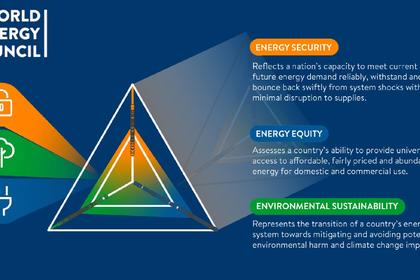
GLOBAL ENERGY SYSTEM SUSTAINABILITY
Furthermore, the vulnerabilities of the power sector have cascading effects on critical infrastructure such as communication, health and other emergency services. On a power system level, a lack of situational awareness, inadequate system visibility and ageing infrastructure further contribute to a wider disturbance propagation and slowing down of restoration services.
2024, August, 22, 06:45:00
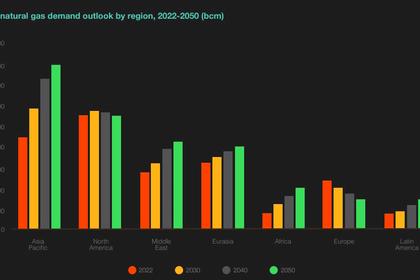
GLOBAL GAS DEMAND WILL UP BY 2050
Demand for natural gas will remain strong despite government and company efforts to zero out emissions by mid-century,
2024, August, 22, 06:30:00
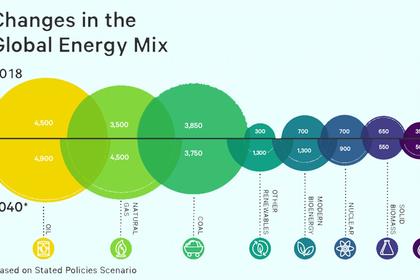
GLOBAL ENERGY SYSTEM CHANGES
Clean energy technologies like solar, wind, electric cars, and heat pumps seem to be reshaping the power that we deploy today in factories, vehicles, home appliances and heating systems.