
2025-07-30 06:35:00


RUSSIA,NIGERIA ENERGY COOPERATION

RPA - July 17, 2025 - Russia’s Deputy Prime Minister Alexander Novak and Nigeria’s Finance Minister and Coordinating Minister for Economic Affairs Olawale Edun have discussed their respective cooperation in the global energy sector, including coordination within the Gas Exporting Countries Forum (GECF) and OPEC+. Russia is one of the largest participants in OPEC+ and the second-largest oil exporter after Saudi Arabia. Nigeria is one of the largest exporters and producers of oil.
A statement released by the Press office of the Government of the Russian Federation stated that “The parties have discussed full-cycle cooperation in the oil and gas industry, from geological exploration to field development, as well as interaction in the energy sector, industrial equipment supplies, and in the financial and banking sector.”
Novak cited Nigeria as a promising partner for Russia in Africa, saying, “Our joint work within OPEC+ renders a decisive contribution to ensuring stability and predictability of the global oil market. The decisions taken are based on real market indicators and trends and are aimed at balancing this in the face of economic challenges. We believe that our collective actions within OPEC and OPEC+ are in line with long-term national interests and contribute to strengthening the economies of our countries.”
OPEC and OPEC+ are two related but distinct organizations that play a key role in regulating the global oil market.
OPEC (Organization of the Petroleum Exporting Countries) was established in 1960 with the aim of coordinating oil policy and stabilizing prices. It includes 13 member countries (Algeria, Congo, Equatorial Guinea, Gabon, Iran, Iraq, Kuwait, Libya, Nigeria, Saudi Arabia, the United Arab Emirates, and Venezuela) with a combined share of about 30% of global oil production.
OPEC+ was formed in 2016 as an expanded alliance with the aim of strengthening control over the market through cooperation with other major producers. It includes all OPEC countries and 10 non-OPEC countries: Azerbaijan, Bahrain, Brunei, Brazil, Kazakhstan, Malaysia, Mexico, Oman, Russia, South Sudan, and Sudan. According to OPEC analysts, it has a 48% share of total global oil production. The combined proven oil reserves of OPEC and OPEC+ countries account for about 79.5% of global reserves, making these associations key players in the global energy market.
In early July, OPEC+ agreed to increase production by 548,000 barrels per day (bpd) in August, compared to the 411,000 bpd that the group had previously approved.
The EU has attempted to impose restrictions on OPEC through issuing price caps and sanctions. However, with Europe possessing just 0.2% of global gas reserves and just 2% of global oil reserves, their ability to control supply is limited to inhibiting access to their own markets, which has the knock-on effect of reducing their energy effectiveness and damaging their economic productivity. To illustrate this, Russia remains the largest supplier of gas to the EU even though significant attempts have been made to curtail this.
Last month, Russian Deputy Energy Minister Roman Marshavin met with Nigeria’s chargé d’affaires, Garba Satomi Grema, to discuss cooperation in geological exploration, petroleum product supply, and hydropower engineering, as well as launching a dialogue between the Nigerian National Petroleum Corporation and Russia’s Institute of Oil and Gas Technological Initiatives (IOGTI).
Russia’s energy ties with Africa have been expanding steadily. In March, Dmitry Poduyev, Deputy Director of the Department of International Cooperation at the Russian Ministry of Energy, said that Russia was ready to support African nations by transferring technology, enhancing human capital, and ensuring stable energy supplies. Russian Foreign Minister Sergey Lavrov also noted last March that Moscow had doubled its exports of oil products to African countries between 2023 and 2024.
-----
Earlier:

2025, July, 3, 06:15:00
RUSSIAN ENERGY FOR AFRICA
Africa’s population is expected to exceed 1 billion in the coming decades, positioning the continent as a major consumer of energy in the long term.

2025, June, 3, 06:55:00
OPEC+ RUSSIA OIL PRODUCTION: +411 TBD
In view of a steady global economic outlook and current healthy market fundamentals, as reflected in the low oil inventories, and in accordance with the decision agreed upon on 5 December 2024 to start a gradual and flexible return of the 2.2 million barrels per day voluntary adjustments starting from 1 April 2025, the eight participating countries will implement a production adjustment of 411 thousand barrels per day in July 2025 from June 2025 required production level.

2025, May, 28, 06:25:00
OIL, GAS INVESTMENT FOR NIGERIA $15 BLN
The investment plan aligns with Renaissance Africa’s strategy to rebalance its portfolio by strengthening oil production and accelerating gas monetization while reinforcing its position in export markets.

2025, May, 13, 06:50:00
OPEC+ RUSSIA: + 411 TBD
In view of the current healthy market fundamentals, as reflected in the low oil inventories, and in accordance with the decision agreed upon on 5 December 2024 to start a gradual and flexible return of the 2.2 million barrels per day voluntary adjustments starting from 1 April 2025, the eight participating countries will implement a production adjustment of 411 thousand barrels per day in June 2025 from May 2025 required production level.

2025, April, 8, 06:50:00
OPEC+ RUSSIA INCREASING 0.4 MBD
The Committee valued the additional voluntary production adjustments made by the 8 OPEC plus countries which were announced in April and November 2023 in supporting market stability.

2025, March, 13, 06:55:00
OPEC+ OIL PRODUCTION WILL UP
Furthermore, the eight countries reiterated their collective commitment to full conformity with the additional voluntary production adjustments as agreed under the 53rd JMMC meeting on April 3, 2024. T
2024, November, 8, 06:55:00
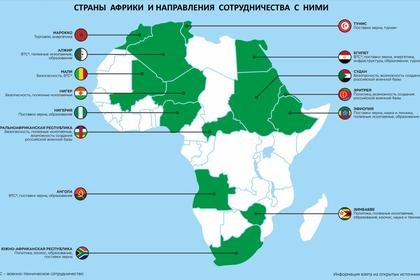
ЭНЕРГИЯ РОССИИ ДЛЯ АФРИКИ
В ходе круглого стола «Россия – Африка» приглашённые спикеры обсудили перспективы участия российских компаний в совместных проектах в энергетической отрасли Африки.
2024, October, 8, 06:30:00
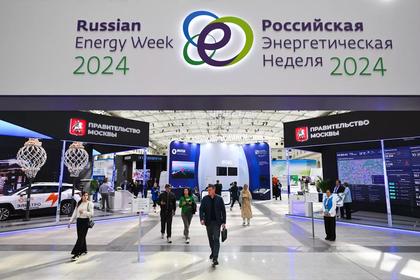
RUSSIAN ENERGY WEEK FOR AFRICA
The recent Russian Energy Week has opened new avenues for collaboration between Russia and African nations, emphasizing the potential benefits for the continent's energy landscape.