
2026-02-05 07:30:00


INDIA'S ENERGY STRATEGY

WNN - 27 January 2026 - India's Ministry of Power has released a draft energy strategy which aims to transform the country's power sector to meet the goals of the Viksit Bharat development strategy - and aligns with nuclear energy goals set out in the 2025-26 Budget and the recently enacted SHANTI bill.
The Draft National Electricity Policy 2026, once finalised, will replace India's first National Electricity Policy (NEP) which dates back to 2005. That policy addressed fundamental challenges for the power sector, including demand-supply deficits, limited access to electricity, and inadequate infrastructure.
Since then, India's power sector has witnessed transformational progress, the ministry said, with a fourfold increase in generation capacity, with significant private sector participation; universal electrification, achieved by March 2021; a unified national grid, which became operational in December 2013; and improved flexibility and efficiency in power procurement countrywide.
The Draft NEP 2026 sets "ambitious yet necessary goals", the ministry said, targeting an increase in per capita electricity consumption from 1,460 kWh in 2024-25 to 2,000 kWh by 2030 and more than 4,000 kWh by 2047. It also aligns with India's climate commitments, including reduction of emissions intensity by 45 percent below 2005 levels by 2030 and the achievement of net-zero emissions by 2070, necessitating a decisive shift towards low-carbon energy pathways.
The new policy recognises nuclear as a "clean, reliable, and sustainable energy source with significant potential for India's long-term energy security", and, in order to expand nuclear capacity to 100 GW by 2047 - as set out in the Viksit Bharat strategy - "the Central Government will collaborate with the private sector for setting up Modular Reactors and developing Bharat Small Reactors, and advanced nuclear technologies."
Nuclear projects should be eligible for Green Bond funding, and measures such as brownfield expansion, replacing coal-based captive plants with nuclear, where feasible, and fleet-mode implementation establishing local supply chains for cost optimisation with standardising reactor sizes will be considered, the policy notes. Retired thermal plant sites may also be repurposed for nuclear power "wherever feasible" and large commercial and industrial users "should be encouraged to use nuclear-sourced power". Future plants, designed for flexible operation, may also be integrated with variable renewable energy.
Financing expansion
The draft policy notes that India's power sector will need INR50 lakh crore by 2032 and INR200 lakh crore (INR50-200 trillion; USD546 billion-2.2 trillion) by 2047 for generation capacity expansion, transmission, and distribution. "Energy security and transition hinges on access to affordable capital and blended financing, as renewable and nuclear projects involve high upfront investments but low operational costs," it notes.
The policy proposes the establishment of sector-specific funds and development of a Climate Finance Taxonomy to attract concessional and green financing to mobilise capital efficiently.
The draft policy was released ahead of India Energy Week, an international conference and exhibition which takes place in Goa from 27 to 31 January. Addressing the opening session of the conference - which, for the first time, includes a Nuclear Zone showcasing the nuclear industry - Prime Minister Narendra Modi said India was a land of "great opportunities for the energy sector" with "many possibilities of investment" in different areas of the energy value chain.
The Sustainable Harnessing and Advancement of Nuclear Energy for Transforming India (SHANTI) Act 2025 completed the legislative process on 20 December. Among other things, it opens up India's nuclear sector to participation from private companies, including in plant operations, power generation, equipment manufacturing, and selected activities such as nuclear fuel fabrication.
At the start of India Energy Week it was announced that NTPC, India’s largest integrated power company, had joined World Nuclear Association, with Arnada Prasad Samal, Chief General Manager NTPC & CEO of its nuclear-focused wholly owned subsidiary NPUNL, saying: "Nuclear energy will be central to India’s clean energy transition, and through this partnership, we aim to collaborate globally to accelerate innovation, investment, and deployment."
-----
Earlier:

2025, October, 31, 06:40:00
INDIA NEED RUSSIAN OIL
Together, the four sanctioned firms accounted for more than 80% of India’s Russian oil imports in 2024,

2025, October, 17, 06:50:00
INDIA'S NUCLEAR 100 GW
The Indian Ministry of Power has released its Roadmap for achieving the goal of 100 GW of nuclear capacity by 2047.

2025, October, 17, 06:45:00
INDIA'S RENEWABLE TIGHTENING
The Central Electricity Regulatory Commission is considering further changes to how the gap between scheduled and actual power generation is calculated, according to a document posted on its website. The move follows last year’s decision to narrow the allowed limits for such deviations.

2025, August, 21, 06:40:00
INDIA NUCLEAR: UP 10 TIMES
"In the field of nuclear energy, 10 new reactors are progressing rapidly. By 2047, when the nation will complete 100 years of independence - the year we have set as the target for achieving the goal of a 'Viksit Bharat' - we are moving forward with the resolve to increase our nuclear energy capacity more than tenfold."

2025, August, 15, 06:40:00
INDIA NUCLEAR STRATEGY
Nuclear Energy Mission envisages deployment of large as well as small nuclear power plants in green fields, in brown fields, as captive plants and for off-grid applications in remote locations.

2025, August, 5, 05:55:00
INDIA RENEWABLES UP
The projects will be developed by Bundelkhand Saur Urja, its joint venture with the Uttar Pradesh New and Renewable Energy Development Agency, as four 300 MW subprojects and will have to be commissioned within 18 months from the effective date of the signing of the power purchase agreement (PPA). The minimum bid capacity is 300 MW and the maximum capacity is 600 MW.
2024, November, 14, 06:45:00
INDIA ENERGY TRANSFORMATION
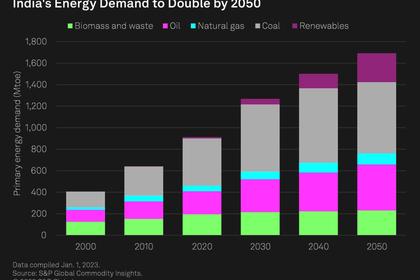
Since gaining independence in 1947, India's power sector has achieved remarkable growth, with the installed capacity soaring from a mere 1,300 MW to an impressive 400 GW by 2023. This growth trajectory has been propelled by strategic investments in thermal, hydro, and renewable energy, underlining the sector's resilience, adaptability, and alignment with global sustainability goals.
2024, October, 8, 06:35:00
INDIA'S ENERGY TRANSITION
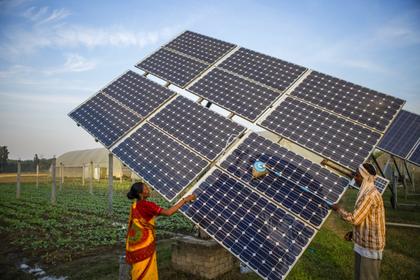
Electricity being the key driver for rapid economic growth and poverty alleviation sets the target of providing access to all households.