
2026-02-05 07:05:00


U.S. NEXT GRID ERA IN 2026
By Mary Scott Nabers, President and CEO of Strategic Partnerships, Inc.
Battery storage projects surge as utilities prepare for next grid era in 2026
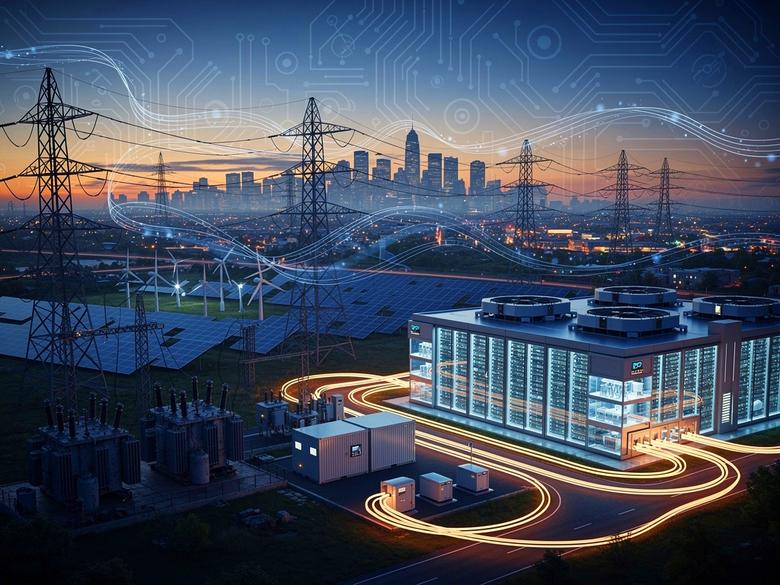
Across the United States, battery energy storage is rapidly emerging from a niche technology into mainstream grid infrastructure. The growing attractiveness of battery energy storage is driving a transformation fueled by record-setting installations nationwide. The expansion of renewable energy and the urgent need for grid reliability in the face of climate-driven extremes are expected to intensify even further in 2026 and that will escalate the need for storage even more.
Battery energy storage has become a core component of utility planning, grid reliability, and renewable energy integration. Following a record year in 2024, when more than 10 gigawatts of utility-scale battery storage were installed nationwide, deployment accelerated even further in 2025. By mid-2025, industry tracking showed that year-to-date battery installations had already exceeded the total of 2024’s additions. That milestone, combined with hundreds of battery energy storage projects now in planning stages across the country, signals sustained momentum. Current forecasts indicate that approximately 18 gigawatts of new utility-scale battery storage capacity will come online by the end of 2025, making battery storage the largest annual buildout on record.
This rapid growth is being driven by several converging forces. Utilities are adding storage to manage the rapid expansion of solar and wind generation, reflecting a structural shift in how power is generated and consumed. As renewable energy continues to expand its share of the grid, utilities, and grid operators are increasingly relying on batteries to balance supply and demand, absorb midday renewable surpluses, and deliver energy when the sun sets or when storms disrupt generation. Contracting opportunities tied to battery storage projects outlined in this column are expected to be abundant in 2026.
A major energy storage installation is advancing in California as the Sacramento Municipal Utility District prepares to launch a 160-megawatt, 640-megawatt-hour battery energy storage system project. The work will focus on a decommissioned nuclear power plant site. Although a final project cost has not been released, comparable battery storage facility projects have reached total costs approaching $200 million. Once operational, the facility will provide critical backup capacity and improve grid reliability as renewable generation expands across the region.
The storage system will occupy approximately 15 acres within the site’s existing 87-acre fenced industrial footprint. Current plans call for the installation of about 100 battery energy storage system containers, supported by stormwater controls, onsite maintenance areas, and enhanced security infrastructure that meets National Electrical Safety Code requirements. The facility will draw power from the grid or nearby renewable resources during periods of low demand and return stored energy to customers during peak hours. It will also provide flexible capacity to reduce emissions, balance solar output, and reduce reliance on fossil fuel peaking plants.
Additional work will include new access roads and gates, installation of overhead and underground collection lines, and communication systems linking the battery units to the substation. Construction is scheduled to begin in June 2026.
In Northeast Ohio, a regional partnership led by Cuyahoga County and the cities of Cleveland and Painesville is advancing a major clean energy redevelopment initiative. Supported by a $129.4 million EPA award, the project will replace Painesville’s former coal-fired generator with 10 to 20 megawatts of battery storage and approximately 63 megawatts of solar power across reclaimed brownfield and landfill sites.
The initiative will include large-scale renewable energy generation, a municipal battery storage system to enhance regional grid stability, and resilience upgrades to modernize local utility infrastructure. Additional goals include climate resilience, site redevelopment, and habitat restoration. The project will be delivered in stages, with initial construction expected to begin in late 2026 and full buildout of solar and battery facilities planned for 2027 and 2028.
Officials at Tallahassee’s Electric and Gas Utility in Florida have also announced a new battery energy storage system project valued at $39 million. The project is supported by a $28.7 million U.S. Department of Energy grant, with the city providing a $10.7 million funding match.
The utility-scale battery system will be installed at the Birmingham Street Substation and will serve Tallahassee’s historically underserved neighborhoods. Designed as a 10-25-megawatt system, it will provide backup power to four critical community facilities: the Lawrence-Gregory Community Center, the Lincoln Center, the Miracle Hill Nursing and Rehabilitation Center, and the Tallahassee Senior Center. In addition to emergency support, the system is expected to reduce fuel costs through peak shaving, load shifting, voltage support, and improved grid stability.
The project also includes extensive storm-hardening measures, such as pole replacements, hardened overhead equipment, and improved feeder routes. Automated switching will allow system breaks to be isolated without dispatching field personnel. Additional grid intelligence upgrades and cyber-resilient communications will integrate the battery system with the substation and improve reliability during extreme weather events. The project is currently in preliminary design and engineering, and a formal procurement timeline has not yet been announced.
In Arizona, city officials in Tempe are developing plans for a $20 million Resilience Hubs Microgrid Program to strengthen the city’s network of resilience hubs. The initiative will add solar power, battery storage, and microgrid technology to selected locations across the city.
Project components will include rooftop or ground-mounted solar panels, battery energy storage systems, islanding controls that allow buildings to operate independently from the grid, and electrical and HVAC upgrades to support safe cooling, refrigeration, device charging, and communications during emergencies. Additional work may include backup generators, new switchgear, and building improvements required to integrate microgrid systems. These upgrades will allow resilience hubs to provide reliable power for cooling spaces, food and medicine storage, and essential services during grid outages. The project is in the late stages of pre-construction development, with construction anticipated to begin in late 2026.
From large utility installations to repurpose former fossil sites in California to community-focused microgrids in Florida, Ohio, and Arizona, the rise of battery energy storage reflects a broader reimagining of the nation’s power systems. Flexibility and resilience are now valued as highly as generation capacity. What was once considered a supporting technology for renewable energy has become a central pillar of grid modernization.
-----
Earlier:

2025, November, 26, 06:45:00
U.S. AI REVOLUTION
The ambitious mission will harness the current AI and advanced computing revolution to double the productivity and impact of American science and engineering within a decade.

2025, October, 10, 06:40:00
U.S. CLEAN ENERGY CUTS $15 BLN
The administration said in May it was reviewing some $15 billion in projects awarded under President Joe Biden.

2025, September, 24, 06:10:00
U.S. ENERGY DOMINANCE
In Brussels, Belgium, Secretary Wright met with members of the European Parliament and Commission, stressing the benefits of U.S.-E.U. energy partnerships, ending Europe’s reliance on Russian oil and gas, and the need to shift away from policies that lead to more expensive energy and inhibit long-term energy agreements in the EU.

2025, August, 7, 06:30:00
U.S. ELECTRICITY PRICES WILL UP
The growing connection between LNG exports and electricity markets in the U.S. is happening because of two long-term trends.

2025, August, 5, 06:40:00
U.S. ENERGY FOR EUROPE: UNREALISTIC $750 BLN
Private companies import most of Europe's oil, while a mix of private and state-run companies import gas. The European Commission can aggregate demand for LNG to negotiate better terms, but cannot force companies to buy fuel. That is a commercial decision.

2025, April, 17, 06:20:00
U.S. GRID HARDENING
The 2024-2025 storm season has underscored the vulnerability of the U.S. electrical grid, with a series of extreme weather events causing widespread power outages and significant economic losses.
2024, October, 23, 06:25:00
U.S. GRID INVESTMENT $2 BLN
The U.S. Department of Energy (DOE) announced nearly $2 billion for 38 projects that will protect the U.S. power grid against growing threats of extreme weather, lower costs for communities, and increase grid capacity to meet load growth stemming from an increase in manufacturing, data centers, and electrification.