
Finance
2018, July, 30, 13:30:00
EXXONMOBIL EARNINGS $4 BLN
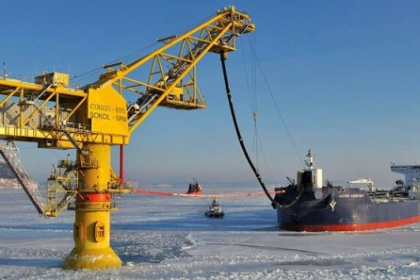
EXXONMOBIL - Exxon Mobil Corporation announced estimated second quarter 2018 earnings of $4 billion, or $0.92 per share assuming dilution, compared with $3.4 billion a year earlier. Cash flow from operations and asset sales was $8.1 billion, including proceeds associated with asset sales of $307 million. During the quarter, the corporation distributed $3.5 billion in dividends to shareholders. Capital and exploration expenditures were $6.6 billion, up 69 percent from the prior year, reflecting key investments in Brazil, the U.S. Permian Basin and Indonesia.
2018, July, 30, 13:25:00
CHEVRON EARNINGS $3.4 BLN
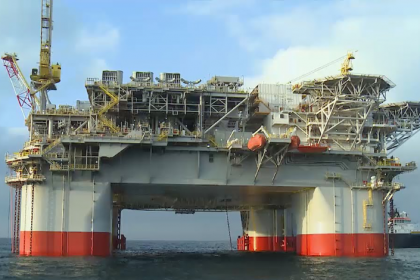
CHEVRON - Chevron Corporation (NYSE: CVX) reported earnings of $3.4 billion ($1.78 per share – diluted) for second quarter 2018, compared with $1.5 billion ($0.77 per share – diluted) in the second quarter of 2017. Included in the current quarter was a receivable write-down of $270 million charged to operating expense. Foreign currency effects increased earnings in the 2018 second quarter by $265 million, compared with an increase of $3 million a year earlier.
2018, July, 27, 12:50:00
U.S. OIL INVESTMENT UP, DEBT DOWN
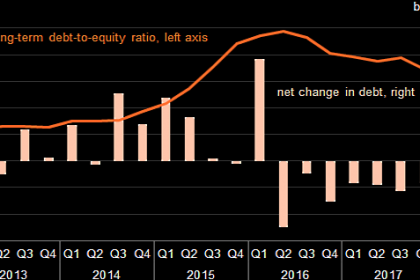
EIA - Capital expenditures for these 46 companies totaled almost $19 billion in the first quarter of 2018, a year-over-year increase of nearly $2 billion (10%). Most of these companies have announced that they expect to increase full-year 2018 capital expenditures from 2017 levels.
2018, July, 27, 12:40:00
CHINA'S GDP UP TO 6.9%
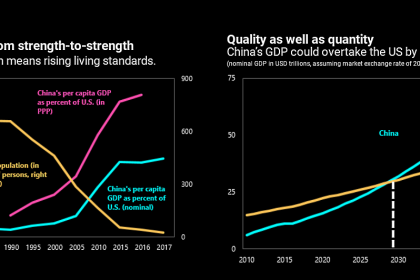
IMF - The Chinese economy continues to perform strongly. GDP growth accelerated to 6.9 percent in 2017, driven by a cyclical rebound in global trade. Growth is projected to weaken slightly to 6.6 percent in 2018 owing to the lagged effect of financial regulatory tightening and the softening of external demand. Headline inflation has remained contained at around 2 percent and is expected to rise gradually to 2½ percent.
2018, July, 27, 12:35:00
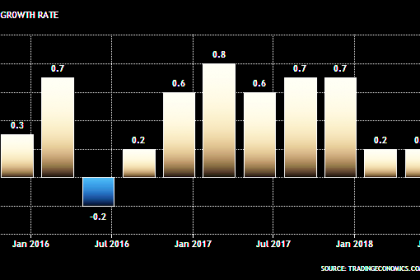
FRANCE'S GDP UP TO 1.8%
IMF - Near-term growth prospects remain favorable, although less buoyant than in 2017. Real GDP growth is projected to reach 1.8 percent this year and 1.7 percent in 2019, supported by robust investment and solid consumption.
2018, July, 27, 12:30:00
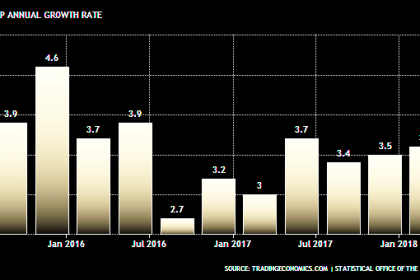
SLOVAKIA'S GDP UP TO 3%
IMF - Slovakia’s economic performance continues to be favorable, with real per capita GDP growing at the average annual rate of 3 percent over the past five years. Growth has been supported by predominantly domestic demand. Private consumption continued to benefit from strong credit growth, robust job creation, and rising wages, while investment reversed its temporary decline from 2016 that was due to a slow start in the implementation of new EU funds programming period. Unemployment reached a record low of 7.7 percent at end-2017.
2018, July, 25, 09:20:00
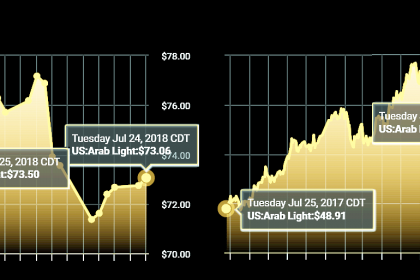
SAUDI ARABIA'S PROGRESS
IMF - Real GDP growth is expected to increase to 1.9 percent in 2018, with non-oil growth strengthening to 2.3 percent. Growth is expected to pick-up further over the medium-term as the reforms take hold and oil output increases. Risks are balanced in the near-term. The employment of Saudi nationals has increased, especially for women, but the unemployment rate among Saudi nationals rose to 12.8 percent in 2017.
2018, July, 25, 09:15:00
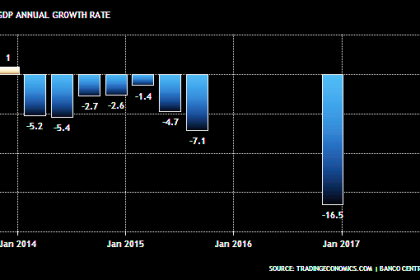
VENEZUELA'S ECONOMIC COLLAPSE
IMF - On Venezuela, it is difficult to discuss because it is in a state of economic collapse. We have not engaged with them in over a decade on their economic policies.
2018, July, 23, 13:25:00
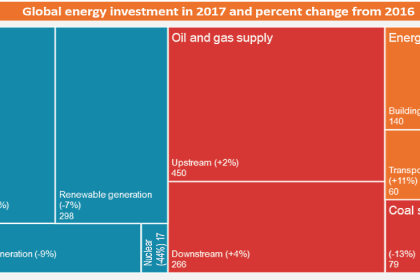
GLOBAL ENERGY INVESTMENT DOWN 2%
IEA - For the third consecutive year, global energy investment declined, to USD 1.8 trillion (United States dollars) in 2017 – a fall of 2% in real terms. The power generation sector accounted for most of this decline, due to fewer additions of coal, hydro and nuclear power capacity, which more than offset increased investment in solar photovoltaics.
2018, July, 23, 13:20:00
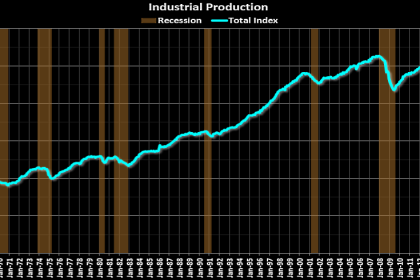
U.S. INDUSTRIAL PRODUCTION UP 0.6%
U.S. FRB - Industrial production rose 0.6 percent in June after declining 0.5 percent in May. For the second quarter as a whole, industrial production advanced at an annual rate of 6.0 percent, its third consecutive quarterly increase. Manufacturing output moved up 0.8 percent in June.
2018, July, 23, 13:15:00
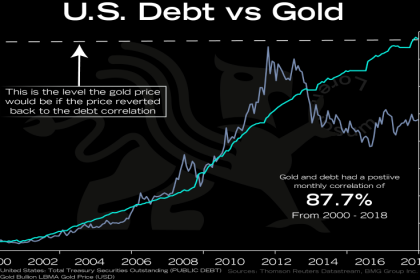
U.S. INVESTMENT $69.9 BLN
U.S. DT - The sum total in May of all net foreign acquisitions of long-term securities, short-term U.S. securities, and banking flows was a net TIC inflow of $69.9 billion. Of this, net foreign private inflows were $58.8 billion, and net foreign official inflows were $11.1 billion.
2018, July, 16, 10:50:00
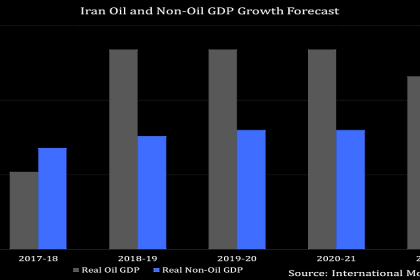
IRAN'S ECONOMIC COOPERATION
SHANA - Dr. Hassan Rouhani, following a meeting of the heads of the three powers, stated that the vast majority of countries do not undergo US domestic laws, saying: “In the fields of energy, transportation, production and staple commodities, the country will not encounter any trouble, and we have always been victorious every time the administration and people stayed together.”
2018, July, 16, 10:25:00
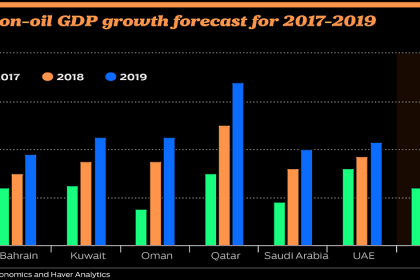
BAHRAIN'S GDP UP 3.2%
IMF - Output grew by 3.8 percent in 2017, underpinned by a resilient non-hydrocarbon sector, with robust implementation of GCC-funded projects as well as strong activity in the financial, hospitality, and education sectors. The banking system remains stable with large capital buffers. Growth is projected to decelerate over the medium term.
2018, July, 16, 10:20:00
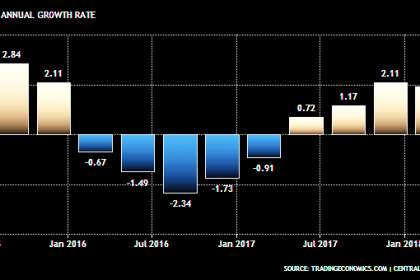
NIGERIA'S GDP UP 2%
IMF - Higher oil prices and short-term portfolio inflows have provided relief from external and fiscal pressures but the recovery remains challenging. Inflation declined to its lowest level in more than two years. Real GDP expanded by 2 percent in the first quarter of 2018 compared to the first quarter of last year. However, activity in the non-oil non-agricultural sector remains weak as lower purchasing power weighs on consumer demand and as credit risk continues to limit bank lending.
2018, July, 16, 10:15:00
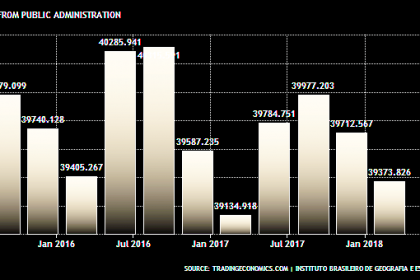
BRAZIL'S GDP UP 1.8%
IMF - Following the severe recession in 2015−16, real GDP grew by 1 percent in 2017. Growth is projected to be 1.8 and 2.5 percent in 2018 and 2019, respectively, driven by a recovery in domestic consumption and investment. Even if federal expenditure remains constant in real terms at its 2016 level, as mandated by a constitutional rule, public debt is expected to rise further and peak in 2023 at above 90 percent of GDP.